WebFeatured
Gilir
2026 Launched · Before first active tenants Founder & Solo Software Engineer
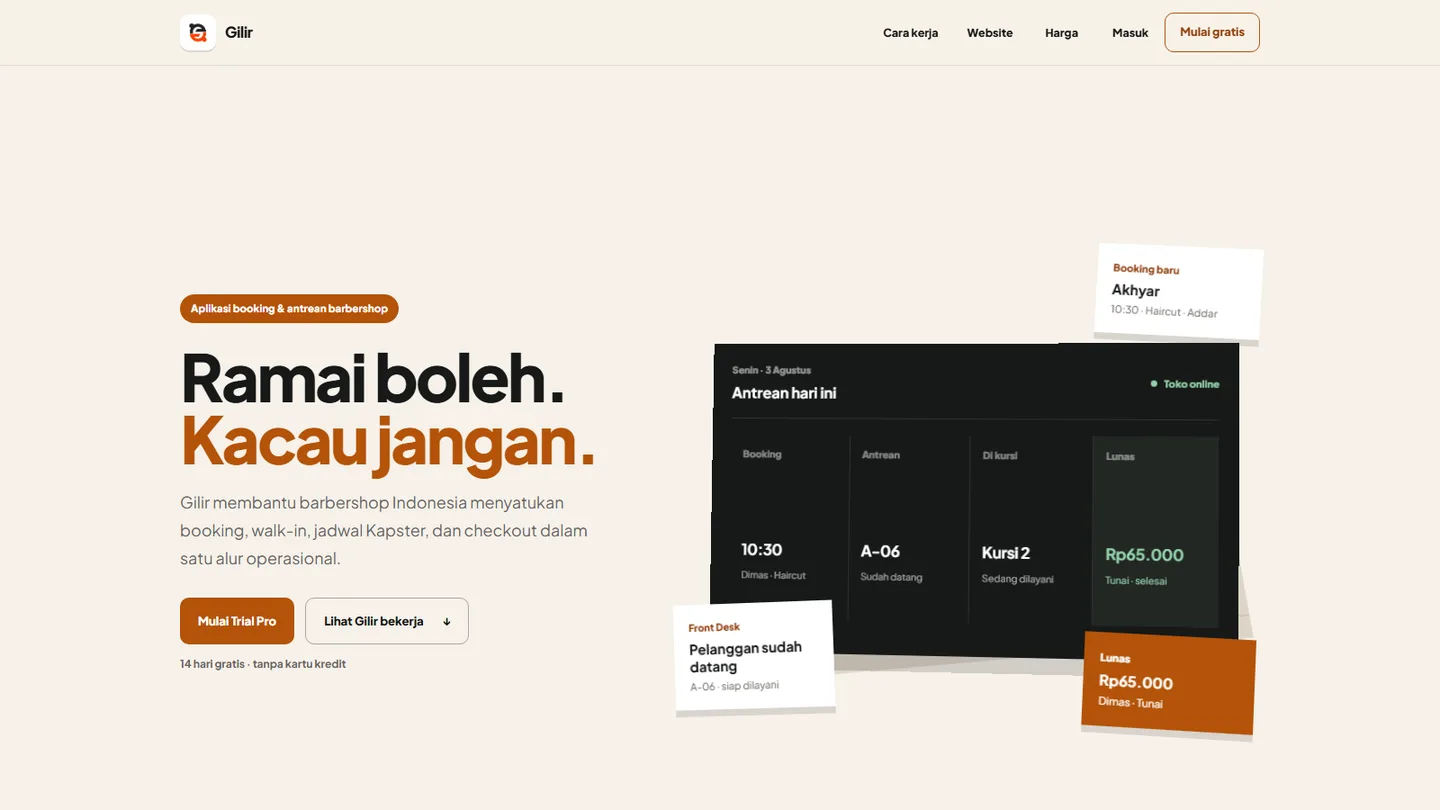
A multi-tenant barbershop SaaS with per-shop subdomains, configurable themes, booking, live queues, and subscription payments.
Next.jsTypeScriptTailwind CSSSupabasePostgreSQLRow Level SecurityMayarDockerCoolify
What was broken?
Barbershops often coordinate bookings, walk-ins, barber availability, and cash across disconnected chats and manual notes. That makes the next customer and the current operational state harder to see.
How I fixed it
I built the product from the initial idea through deployment: each shop gets its own subdomain and configurable theme, while owners, cashiers, barbers, and customers share role-based workflows. Booking and walk-ins feed live queues, schedules, checkout, and reporting. I manage the backend and hosting so shop owners can focus on their dashboard.
What it can do
- Per-shop subdomains and configurable themes
- Role-based owner, cashier, barber, and customer workflows
- Online booking and walk-in intake
- Live queues and barber schedules
- Checkout and operational reports
- Mayar subscription payment integration
The stack that shipped it
Next.js brings the interface and server routes together. Supabase provides Postgres, authentication, realtime updates, and Row Level Security for tenant data access. Docker and Coolify support deployment on a VPS, with Mayar handling subscriptions.
What changed
Launched and preparing for marketing; there are no active tenants yet. A real payment through Mayar was successfully tested in production. That test verifies the payment flow, not customer adoption or revenue.
What I learned
Building a multi-tenant operational product reinforced that authorization, status transitions, and recovery paths matter more than surface feature count.